TRANSFORMING HEALTHCARE FOR HYPOSPADIAS WITH ARTIFICIAL INTELLIGENCE

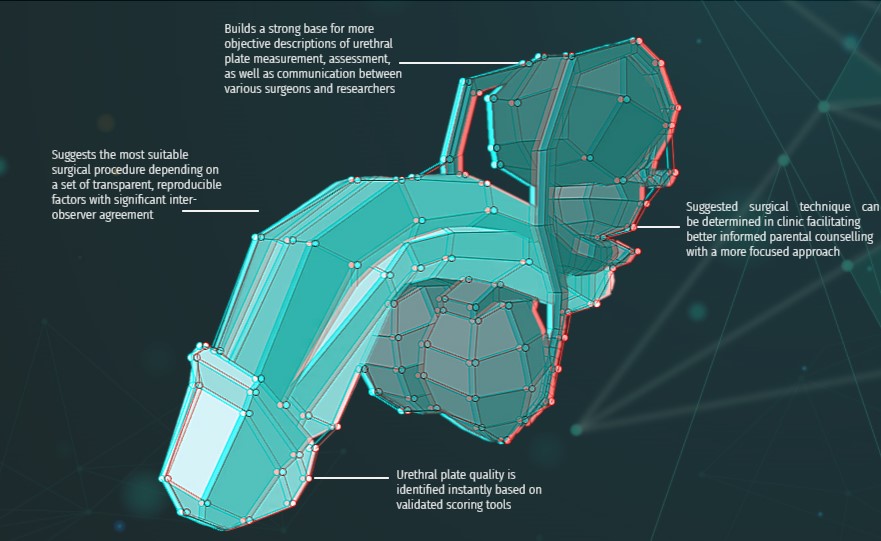
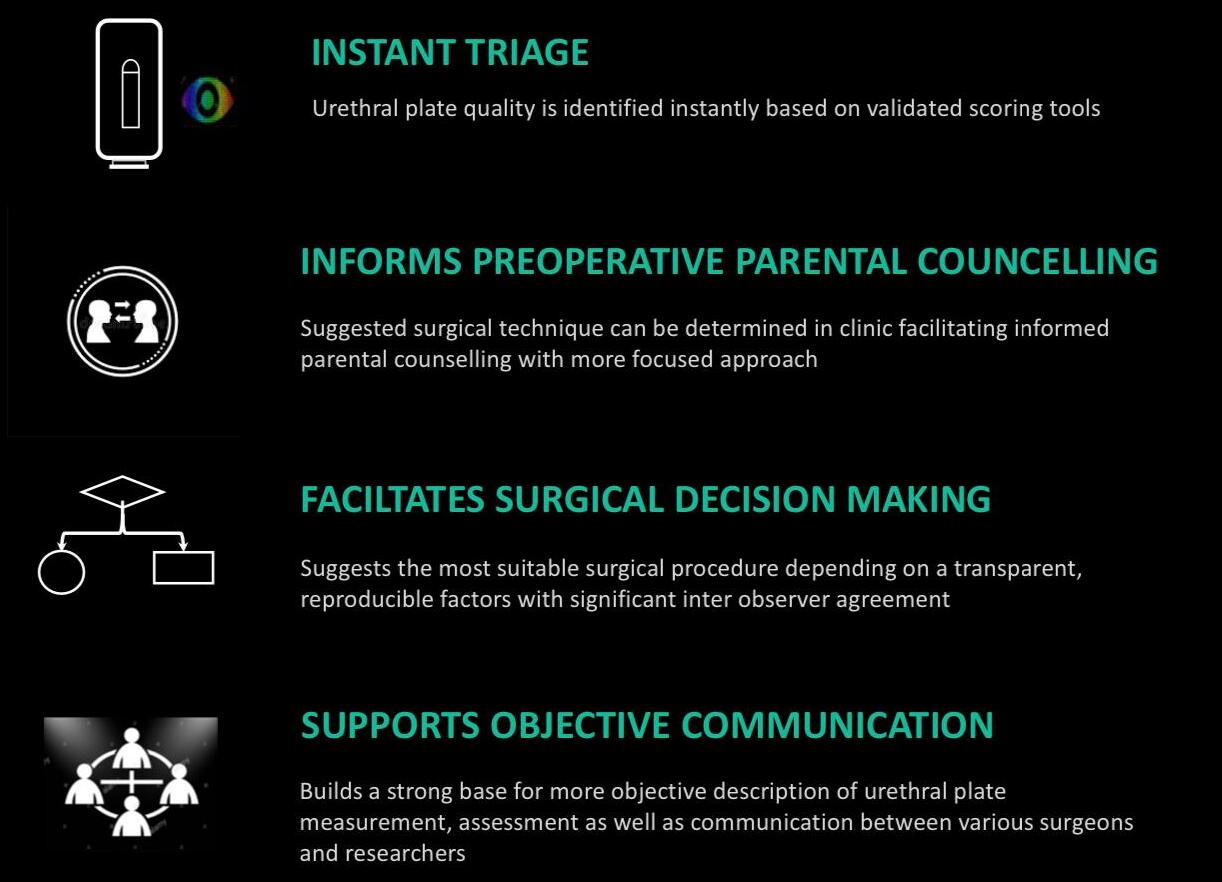
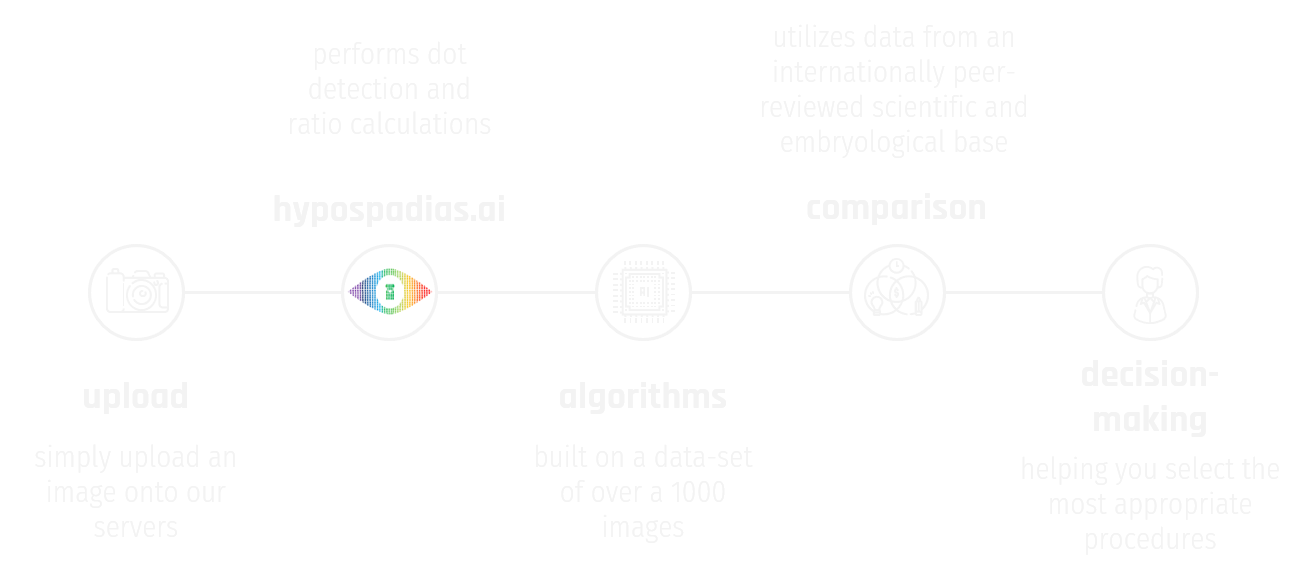
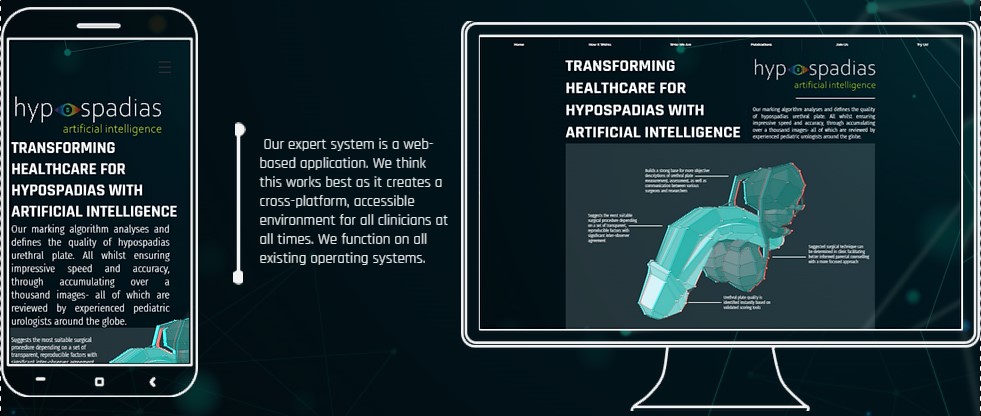
Our marking algorithm analyses and defines the quality of hypospadias urethral plate. All whilst ensuring impressive speed and accuracy, through accumulating over a thousand images- all of which are reviewed by experienced pediatric urologists around the globe.
"Our AI technology is specifically designed to support skilled pediatric urologists globally by understanding and complementing their existing workflows, thereby enabling them to manage hypospadias anomalies more efficiently."

DR. Tariq Abbas
MBBS, IMRCS(Ire.), FEBPS, CAB GPS, FEAPU(Int.), PhD (Cand.).
- Pediatric Urologist, Hamad General Hospital, Doha, Qatar.
- Assistant Professor, Weill-Cornell Medical College-Qatar.
- Clinical Lecturer, College of Medicine, Qatar University.
Making A Difference To Healthcare
How It Works
Supported Platforms
Who We Are

Dr. Tariq Abbas
MBBS, IMRCS(Ire.), FEBPS, CAB GPS, FEAPU(Int.), PhD (Cand.), Department of Health Science and Technology, The Faculty of Medicine, Aalborg, Denmark. Pediatric Urologist, Hamad General Hospital, Doha, Qatar. Assistant Professor, Weil-Cornell Medical College-Qatar. Clinical Lecturer, College of Medicine, Qatar University.Dr. Tariq Abbas, MD, PhD (Cand.) is a Pediatric Urology Specialist at Sidra Medicine, Qatar. He is affiliated with Weill Cornell Medical College-Qatar, and has a special interest in hypospadiology starting from molecular studies, tissue engineering, animal experiments, clinical trials, to artificial intelligence.
Collaborate With Us
All users(including guests) can benefit from our features,which includes immediate calculation of the POST score, alongside a recommendation for the most suitable procedure! However, please note that all images will be utilized to further improve our algorithm's accuracy.
Moreover, if you choose to contribute at least 250 images, you can access exclusive collaborator-only benefits. These include:
- Lifetime access to all available services on hypospadias-ai
- Co-author status on one of our next scientific publications.
Please do registration here to collaborate with us.
Related Literature
Here is a list of publications you might find interesting if you would like to further explore the potential of artificial intelligence in urology. If you have any queries or comments, free to contact us using the form to your right!
- Darius J. Bägli, Nicolas Fernandez. Artificial Intelligence. How Artificial is Urology Practice Becoming? Revista Urología Colombiana / Colombian Urology Journal 2020; 29(01): 005-006 DOI: 10.1055/s-0040-1709124
- Jian Chen, Daphne Remulla, Jessica H. Nguyen, D. Aastha, Yan Liu, Prokar Dasgupta, Andrew J. Hung Current status of artificial intelligence applications in urology and their potential to influence clinical practice.
- How artificial intelligence may reshape urologic practice
- Abbas TO, Vallasciani S, Elawad A, Elifranji M, Leslie B, Elkadhi A, Pippi Salle JL. Plate Objective Scoring Tool (POST); An objective methodology for the assessment of urethral plate in distal hypospadias. J Pediatr Urol. 2020 Oct;16(5):675-682. doi: 10.1016/j.jpurol.2020.07.043. Epub 2020 Aug 5. PMID: 32830060.
- Abbas TO. The Plate Objective Scoring Tool (POST): Further Reflections and Extended Applications. Res Rep Urol. 2021 Nov 11;13:783-791. doi: 10.2147/RRU.S321188. PMID: 34796132; PMCID: PMC8594448.
- Abbas TO, Braga LH, Spinoit AF, Salle JP. Urethral plate quality assessment and its impact on hypospadias repair outcomes: A systematic review and quality assessment. J Pediatr Urol. 2021 Jun;17(3):316-325. doi: 10.1016/j.jpurol.2021.02.017. Epub 2021 Feb 23. PMID: 33846072.
- Tariq Abbas LM. Hypospadias: classification and standardisation of terminology. BJU Int. 2018. doi:10.18591/BJUIK.0623 - DOI
2022 © Qatar University Machine Learning Lab. Created By Tanjim Ahmed